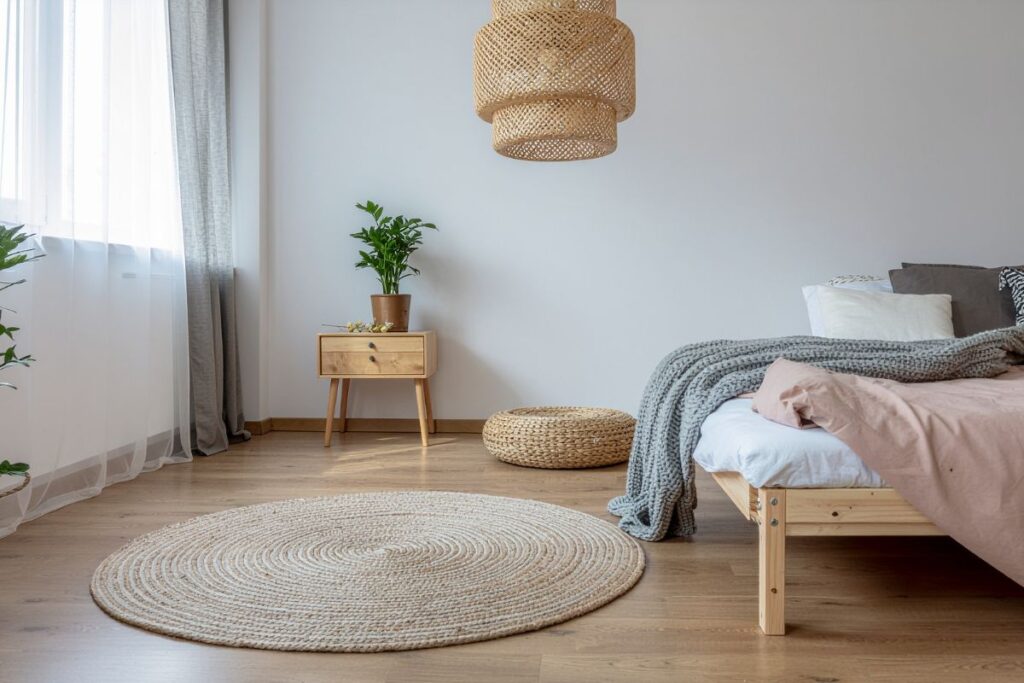

Choosing the right rug for a hardwood living room does more than soften footsteps — it ties together color, scale, and style. For homeowners in Portland, ME considering Portland ME hardwood floor installation or refreshing an existing room, the right rug can protect your wood, add warmth, and create a polished, lived-in look. This guide walks you through practical, design-forward rug pairing strategies that work with real hardwood floors — including an on-the-ground D&T Hardwood Floors case study to illustrate how the decisions play out in an actual Portland home.
Why rug choice matters with hardwood floors
Hardwood floors are durable, timeless, and visually rich. But because they read as a strong design element, rugs need to complement them rather than compete. A well-chosen rug:
- Anchors furniture groupings and defines zones.
- Protects high-traffic areas from wear (especially after Portland ME hardwood floor installation).
- Buffers sound in open-plan living spaces.
- Balances temperature and adds comfort underfoot.
Use the wood’s tone, plank width, and finish as your design starting point. Light, matte planks call for different rug choices than dark, glossy boards.
Start with the floor: analyze color, grain, and finish
Before shopping, take five minutes to evaluate your floor:
Color temperature
Is the wood warm (golden oak, hickory), cool (gray-washed, ash), or neutral? Aim for rugs that either contrast gently or reinforce the temperature. Warm floors pair beautifully with creams, terracottas, and warm blues; cool floors shine with soft grays, charcoal, and jewel-toned accents.
Grain and plank width
Busy, highly figured floors benefit from simpler rug patterns. Wide-plank floors read as contemporary and pair well with large-scale geometric or tonal rugs. Narrow or distressed planks can handle more intricate patterns.
Sheen and finish
High-gloss finishes reflect light and highlight dust and footprints: pick rugs that mask wear (slightly patterned or medium-pile). Matte finishes are forgiving; you can opt for sleeker, low-pile rugs for a refined look.
Rug size & placement: make the room feel intentional
A common mistake is choosing a rug that’s too small. Here are proven rules that scale from compact living rooms to open-plan areas:
Standard seating arrangement
- All-legs-on: For a cohesive area, place all sofa and chair legs on the rug. Ideal in large rooms.
- Front-legs-on: More flexible and common; the front legs of sofas and chairs rest on the rug, leaving back legs off. Works in medium-sized rooms.
- Floating rug: Smaller rugs can float in front of a sofa, but avoid tiny rugs that disconnect furniture.
Minimum measurements
- Leave a consistent border of bare hardwood around the rug: typically 12–18 inches on all sides in living rooms. This frames the rug and shows off the floor after a Portland ME hardwood floor installation.
Dining and multi-zone rooms
If the rug sits beneath a dining table, ensure it’s large enough so chairs remain on the rug when pulled out — add roughly 24 inches on all sides of the table.
Color, pattern, and texture: balance is everything
Choose a dominant cue
Pick one dominant element to guide the room — color, texture, or pattern. Let the rug be that cue and pull accent colors into pillows, throws, or artwork.
Contrast vs. harmony
- Contrast: If your floor is very light, a deeper rug creates grounding drama. Dark wood often benefits from lighter rugs to open the space.
- Harmony: For a serene look, choose rugs within two shades of your floor’s tone and introduce visual interest with texture or subtle pattern.
Mixing patterns
If you want pattern play, keep scale in mind. Pair a large-scale geometric area rug with smaller patterned cushions or a subtle striped throw. When combining rugs with patterned furniture, vary the pattern scale and stick to a restrained color palette.
Texture tips
Layering textures — flatweave on top of a low-pile wool or a jute rug under a softer accent rug — adds depth without clutter. Avoid heavy shag on high-traffic pathways; it traps dirt and can wear down hardwood finishes faster.
Practicality: fiber selection and care
The best rug for hardwood living rooms balances looks with maintenance:
- Wool: Durable, naturally stain-resistant, and comfortable. Excellent all-around choice.
- Synthetic fibers (polypropylene, polyester): Budget-friendly, stain-resistant, good for households with kids or pets.
- Natural fibers (jute, sisal): Great texture and eco-friendly, but avoid high-moisture areas and pair with a soft layer on top for comfort.
- Silk or viscose: Luxurious sheen but not ideal for high-traffic living rooms; save for low-traffic sitting areas.
Rug pads
Never skip a rug pad. A quality pad prevents slipping, protects hardwood finishes, reduces noise, and extends the rug’s life. Choose a non-staining pad specifically made for hardwood floors.
Styling strategies by living room type
Small city living room (condo or cottage)
Use a single rug that fits under the front legs of the sofa and chairs. Light, neutral rugs with a low pile keep the room feeling open while protecting the floor. Consider rugs with subtle patterning to hide dirt between cleanings.
Large open-plan living area
Define zones with two rugs — a large, neutral rug for the main seating area and a smaller patterned rug under a reading nook. Keep a consistent color thread between zones for cohesion.
Family room / high-traffic
Opt for stain-resistant synthetics or wool-blend rugs in medium pile. Choose medium-toned patterns that disguise everyday wear and choose a dense pad to reduce movement.
Case study: Portland living room after Portland ME hardwood floor installation (D&T Hardwood Floors)
Client brief: A Victorian-style home in Portland, ME with newly installed white oak, wire-brushed, matte finish by D&T Hardwood Floors. The homeowners wanted a warm, family-friendly living room that honored the home’s period charm while staying modern.
Challenge: The white oak had a neutral-warm tone with visible grain. The room measured 16′ × 20′ and included a fireplace, two sofas, and a reading chair. The clients preferred durable materials because they have two kids and a Labrador.
D&T’s approach:
- Assessment: D&T’s installer confirmed the plank tone and room lighting. The team recommended a medium-toned rug to prevent the space from feeling washed out and to hide pet hair better than a very light rug.
- Size & placement: A 9′ × 12′ rug was chosen so that the front legs of both sofas and the chair sat on the rug, leaving about 14 inches of visible hardwood around the perimeter — showcasing the recent Portland ME hardwood floor installation.
- Material & pattern: The family selected a low-pile wool blend in a transitional pattern — muted navy, warm taupe, and cream — which balanced the wood’s warmth and introduced durable fiber for easy maintenance.
- Pad selection: D&T recommended a high-quality, breathable felt-and-rubber pad to prevent slippage without trapping moisture against the wood finish.
- Final styling: Accent pillows picked up the navy and taupe tones; a jute runner anchored the entry, providing textural contrast without covering the majority of the newly finished floor.
Outcome: The homeowners reported that the rug tied the furniture together, protected the floor in the highest-traffic zone, and improved the room’s acoustics. The project demonstrated how thoughtful rug selection after a Portland ME hardwood floor installation preserves the investment while elevating the home’s interior.
Common mistakes and how to avoid them
- Rug too small: Avoid rugs that float under the coffee table with no furniture legs on them — they fragment the seating area.
- Wrong pad: Never use a pad that contains rubber or latex that can stain hardwood. Always choose a non-staining pad recommended for finished wood.
- Ignoring room scale: Loud patterns on top of busy wood grain create visual competition. If the floor is the room’s star, let the rug play a supporting role.
- Forgetting traffic patterns: Place rugs where people naturally walk. Avoid placing delicate fibers in direct entry or pathway zones.
Maintenance tips to keep both rug and hardwood looking great
- Vacuum regularly with a setting safe for your rug pile.
- Rotate rugs every 6–12 months to even out wear and sunlight exposure.
- Blot spills immediately; follow fiber-specific cleaning guidance.
- Lift rugs occasionally to check for trapped moisture or debris that could affect the floor finish.
- Refinish high-traffic paths of hardwood as needed — a rug can delay but not eliminate wear.
Conclusion
Rug pairing for hardwood living rooms is a design problem with practical solutions. Start by reading your floor’s color, grain, and finish; choose a rug size that grounds your furniture; balance color, pattern, and texture; and prioritize materials and pads that protect your investment. Whether you’re planning a Portland ME hardwood floor installation or refreshing a finished room, these tips will help you create a living space that’s beautiful, durable, and uniquely yours.
FAQs
Q: How big should a rug be under a sofa?
A: For living rooms, a common rule is to have a rug that allows at least the front legs of the sofa (and other seating) to rest on it. In large rooms, place all legs on the rug for a unified look.
Q: Can I use a rug pad on top of finished hardwood floors?
A: Yes — choose a high-quality non-staining pad labeled safe for hardwood. Avoid thin pads that don’t provide grip or thick rubber pads that can trap moisture.
Q: Which rug fibers are easiest to clean with children and pets?
A: Synthetic fibers like polypropylene or polyester are very stain-resistant and budget-friendly. Wool blends provide a good balance of durability and natural fiber performance.
Q: Will a rug damage my hardwood floor?
A: Not if you use a non-staining rug pad and periodically lift and clean the area beneath. Rugs actually protect floors from direct wear and sunlight.
