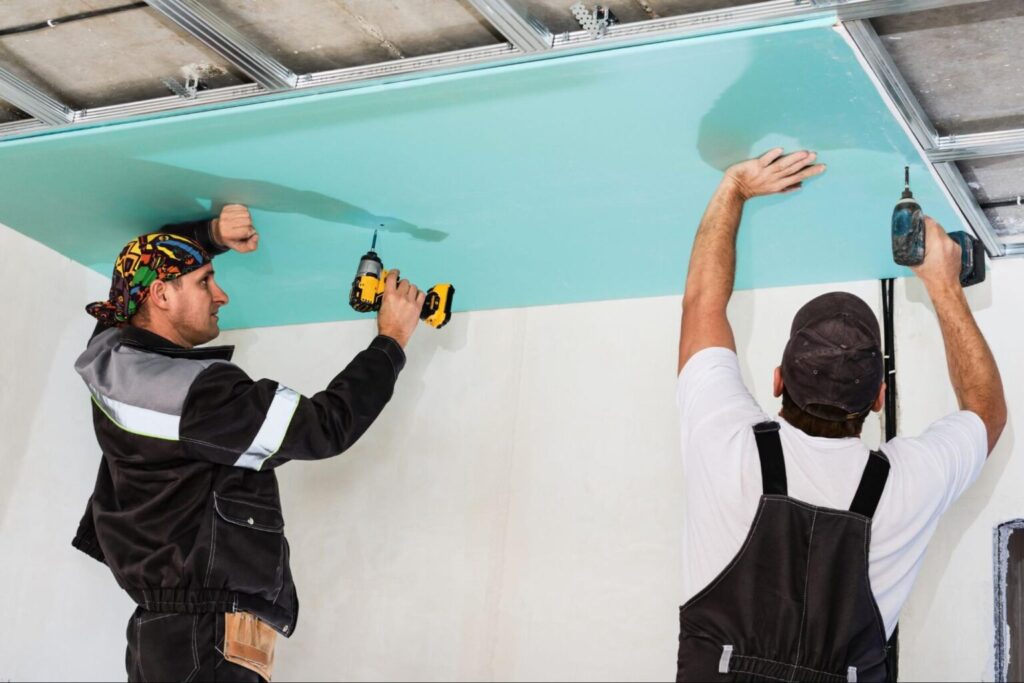

Sun, wind, rain, no matter what season it is, all contribute to the deterioration of our homes over time. Another important structure, the ceiling, is one of the first parts to begin to decay. When damaged, the house experiences other problems that negatively impact the residents. Today, we’ve compiled tips for easily repairing ceilings. You don’t need to rely on a technician. You can repair them with just a few tools, just like a professional.
What causes ceiling leaks?
Leaky ceilings not only make your home look unsightly, but they also affect the health of the residents. Before we look at how to repair your ceiling, let’s look at the causes of ceiling leaks so we can maintain them and prevent them from extending their lifespan.
Ceiling leaks
Ceiling leaks often occur during the rainy season or winter when the humidity is high. This results in moisture and water leaking out of the ceiling and causing damage.
- Leakage from the outside: Water can seep through cracks in the plaster or roof, causing water to pool into the ceiling, causing the ceiling to swell and break through.
- Internal leaks: Most houses with more than one floor or multi-story buildings experience internal leaks where water flows along the cement or tiles and collects at the lower ceiling, accumulating moisture until the ceiling swells and breaks through.
- Leaks from the roof of the house. The roof of the house is the point that covers the house from above. Over time, leaks may occur. When there is a leak in the house structure, water will seep down, causing the ceiling to become wet and damp.
- Some ceilings are not moisture-proof. Some ceiling materials may not meet standards and may not be coated with moisture-proofing agents. Therefore, water can seep in and accumulate, leading to leaks.
- Substandard installation or low-quality materials. In addition to the equipment and materials, other errors that may cause water leakage include drilling holes that do not line up with the pipes or laying tiles without installing waterproofing materials.
Termite-eaten ceiling
Tiny animals that can become a big problem for your home are probably nothing but termites, ants, moths, and insects that damage ceilings, structures, and furniture. You can observe the initial symptoms of damage as follows:
- If your ceiling has brown waves, spots, or stains , brown waves or spots that look like leaks are often caused by termites. If you notice any, you should assume that termites may have infested your ceiling.
- The ceiling has termite tracks. Termite tracks are usually made of mud and are often found in damp corners where light cannot reach. We can use a flashlight to look into the cracks or tap with a screwdriver to see if there is any sagging.
- There is a hole in the ceiling. When you find a hole in the ceiling of your house, press your finger around the hole. If black powder falls down, it means there are termites in that area.
- Listening to sounds
When the ceiling of your house makes unusual noises, there is a possibility that termites are eating the ceiling.
Pro Tip: Protect your home with a high-quality Crawl Space Vapor Barrier in Lafayette CA. Reduce moisture, prevent mold, and improve air quality with our professional installation services. Contact us today!
What do you need to repair the ceiling?
Equipment for professional ceiling repair preparation can be easily prepared as follows:
- sandpaper
- Ceiling panel cutter
- Metal cutting saw blade used to drill holes in the ceiling
- Gypsum plaster
- Gypsum ceiling panels
- Gypsum tape
- Hardwood for use as a new ceiling frame
- Waterproofing grout
All equipment is easily available by simply clicking on Gypstore, the center for ceiling and wall materials, collected from every leading brand, in a variety of styles to choose from according to your needs, meeting customer needs in every dimension.
How to repair a leaking ceiling
Ceiling repair is easy. Simply learn how to identify the cause of the leak, have the necessary equipment ready, and then proceed with a calm, patient approach.
1. Find the cause of the water leak.
Leaks can occur in many forms, such as cracks in the roof or leaks in water pipes. You can look for the following points to identify the source of the leak:
- Look at the light passing through a small point. This method is very accurate because it will reveal the holes where there is a leak.
- Find the dripping point. On rainy days, this method will easily identify the location of the ceiling leak.
- Check for moisture leaks with a tissue. Wrap the tissue around the area where the leak is expected to be to check for moisture leaks.
- Look for any damaged equipment, such as roof tiles or decks that may have cracks causing water leaks, or for taping the water pipes that may be loose and causing water to leak from the pipes.
- Checking for abnormalities in the ceiling is the easiest way to detect them. Simply observing for mold, black stains, and swelling or rotting leaks can indicate a leak is definitely present.
2. Change the grout.
Using waterproof sealant is another way to repair leaky ceilings at the source of the problem. The method is as follows:
- Clean the surface where you want to change the grout.
- Scrape out the old grout lines to make them smooth.
- Mix the grout according to the ratio and spread the grout at a 45 degree angle to the surface.
- When the grout begins to dry, use a damp sponge to wipe away any excess grout.
3. Seal the leak.
Before repairing the ceiling, seal any leaks as quickly as possible to prevent further water leaks. This also prevents mold and germs from becoming a breeding ground. Follow these steps:
- Use butyl tape to prevent leaks from the roof area.
- Use waterproof materials to fill cracked walls.
4. Ceiling plaster
When fixing leaks at various points, we will use the ceiling plastering method to repair the ceiling according to the following steps.
- Use a saw blade to cut out the damaged area about 1 inch from the mold or decayed area.
- Lay hardwood across the new ceiling frame and secure with screws.
- Cut a piece of gypsum board the same size as the damaged part and patch it in place to repair it.
- Use gypsum plaster to smooth the joints.
- Use gypsum board tape to cover it for durability.
5. Sand with sandpaper.
When the putty used in the ceiling repair process is completely dry, use sandpaper to smooth the repaired area to the same level as the old ceiling so that it does not protrude during the finishing painting process.
6. Paint over
Painting over the repaired areas is a beautiful finishing touch after repairing the ceiling yourself. You should choose a color that is close to the original color to avoid stains.
How to repair termite-eaten ceilings
1. Eliminate termites
Repairing ceilings damaged by termites can be easily solved by using chemicals, herbs, or termite bait. However, once the entire termite colony has been eliminated, it is important to find ways to prevent termites from reoccurring as a chronic problem in your home.
2. Repair by puttingty or filling.
If you want to repair a ceiling that is not severely damaged, you can use a method of filling or painting only the holes or problem areas, using the same method as for plastering the ceiling.
3. Change the ceiling.
When our ceiling is severely damaged, it is more appropriate to replace the entire ceiling rather than repairing specific areas. Repairing the entire ceiling yourself can be done as follows:
- The ceiling panels should be cut and the condition of the original frame checked. If the original ceiling frame is not strong, it is not recommended to repair the ceiling yourself.
- Install a new gypsum board.
- Cover with gypsum plaster and then apply gypsum tape.
- When dry, use sandpaper to sand and apply paint to finish.
How to prevent ceiling damage
In addition to ceiling repair, prevention is another factor that can help extend the life of our home ceiling.
1. Observe the changes in the ceiling.
Keep an eye out for any changes in the ceiling, such as blemishes, holes, or termites.
2. Use standard ceilings.
Use standard materials for the ceiling, such as gypsum board. Furthermore, choose a model that is waterproof, mold-proof, termite-proof, and has smooth cuts that won’t sag. Consult and find standard materials at Gypstore to ensure you receive a quality product that is durable.